Richland Hills, TX · Tarrant County
Basement Water Removal in Richland Hills, TXBasement Wall Drying & Basement Moisture Inspection
Homeowners in Richland Hills get Basement Water Removal for basement floor water damage, basement water pump out and basement moisture inspection.
Answered 24/7
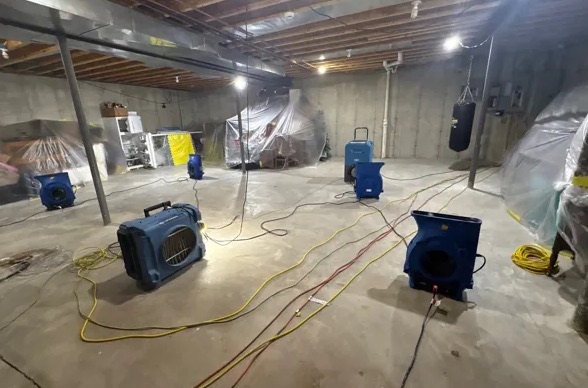
Professional Basement Water Removal in Richland Hills, TX
Few homes in Richland Hills have full basements, but below-grade rooms, sunken lower levels and basement apartments can still take on water from a burst pipe, a sewer backup or a heavy summer storm.
Basements are uncommon in Richland Hills. The same extraction and drying steps apply to slab-level rooms, sunken dens and garages that take on water.
Homeowners in Richland Hills can call (817) 241-4892 day or night when the basement is taking on water. Service also covers North Richland Hills, Haltom City and Watauga, with the same pumping and drying steps.
Professional Basement Water Removal Offerings
Basement Wall Drying
Basement walls are checked with moisture meters. Wet drywall is cut back above the water line, and insulation behind it is removed.
Basement Moisture Inspection
An inspection shows how high water wicked up the walls and how far it spread under flooring, which sets the drying plan.
Basement Dehumidification
Large dehumidifiers pull moisture from basement air, which lets walls, framing and the slab release the water they absorbed.
Basement Floor Water Damage
Concrete floors are squeegeed, extracted and dried with airflow and dehumidifiers until moisture readings drop.
Basement Water Pump Out
A pump-out removes standing water from the basement with submersible pumps, discharging it outside and away from the foundation.
Common Symptoms Requiring Basement Water Removal
Efflorescence on Concrete Walls
White, powdery deposits on concrete walls mean water is passing through the masonry.
Wet or Damp Basement Walls
Basement walls that look dark, feel damp or show tide lines are taking on or holding water.
Rusted Appliances or Furniture
Rust on appliance bases, furniture legs or metal shelving points to standing water or long-term dampness.
Gurgling Sounds From Drains
Gurgling floor drains or slow drains can be an early sign of a sewer line problem.
How Basement Water Removal Works in Richland Hills
Step 1: First Call and Initial Assessment
The source, the type of water and the depth are checked, and the water level is photographed.
Step 2: Bulk Water and Contaminant Removal
Pumps remove standing water, and carpet, pad or drywall touched by dirty water is removed.
Step 3: Drying With Monitoring
Dehumidifiers and air movers run around the clock, with readings logged every day on walls and slab.
Step 4: Post-Drying Evaluation and Documentation
Final readings and photos are compiled to show the basement is dry and what was removed.
What Causes Water Damage in Basements
Window Well Leaks and Drainage
Window wells without drains or covers fill with rain and leak through the windows.
Appliance Malfunctions and Overflows
Washers, utility sinks and water softeners in the basement can overflow or leak.
Heavy Rainfall and Storm Flooding
Heavy rain saturates the soil and pushes water through walls, cracks and the floor joint.
Improper Landscape Grading
Soil that slopes toward the house directs rainwater straight to the basement walls.
Both Residential & Commercial Basement Water Removal
Residential Basement Water Removal
Families should keep children and pets away from basement water until power is safe and the type of water is known.
Commercial Basement Water Removal
In restaurants and shops, basement water near food or stock storage needs removal and cleaning before those areas are used again.
Basement Water Removal vs. DIY: When to Call the Pros
Water that came up through a floor drain may be sewage. Avoid touching it, keep children and pets away and call local water damage pros for cleanup with protective gear and disinfection.
Factors Affecting Basement Water Removal Cost
The cost of basement water removal in Richland Hills depends on how deep the water is, what type of water it is and how much finished material has to come out.
Affected Materials
Finished walls, carpet and laminate take more removal work than bare concrete.
Drying Time Required
Basements dry slowly, and each extra day of equipment adds to the total.
Contamination Level
Sewage or dirty water needs protective gear, removal and disinfection, which costs more.
Does Insurance Cover Basement Water Removal?
Many homeowner policies cover sudden basement water from a burst pipe but not groundwater seepage. Sewer backup coverage is often an add-on, so check yours.
Advantages of Local Basement Water Removal Experts
Clear Communication
You get plain updates on what was found, what was removed and how drying is going.
Advanced Drying Equipment
Pumps, extractors and large dehumidifiers remove water much faster than household tools.
Contamination Safety Protocols
Sewage and dirty water are handled with protective gear, containment and disinfection.
Round-the-Clock Basement Water Removal for Richland Hills
Standing water in a basement soaks walls and floors by the hour. Call (817) 241-4892 for basement water removal in Richland Hills at any time, day or night.
Call Now (817) 241-4892Local Basement Water Removal Coverage for North Richland Hills, Haltom City and Watauga
Help with basement water removal is also available in communities near Richland Hills, including North Richland Hills, Haltom City and Watauga, for flooded basements and sewer backups.
- Basement Water Removal in North Richland Hills
- Basement Water Removal in Haltom City
- Basement Water Removal in Watauga
- Basement Water Removal in Hurst
- Basement Water Removal in Bedford
- Basement Water Removal in Colleyville
- Basement Water Removal in Euless
- Basement Water Removal in Dalworthington Gardens
- Emergency Damage Restoration in 76118
- Storm Damage Restoration in 76118
- Water Damage Restoration in 76118
- Water Extraction Service in 76118
- Water Leak Detection in 76118
- Water Removal Service in 76118
Answers to Top Basement Water Removal Queries
How is basement wall drying done?
Wet drywall is cut back, insulation removed and directed airflow and dehumidifiers dry the studs and masonry.
How is contaminated water handled in a basement?
With protective gear, containment, removal of porous materials and disinfection of hard surfaces before drying.
What causes basement floor water damage?
Storm seepage, burst pipes, appliance leaks, foundation cracks and sewer backups through floor drains are the usual sources.
Why is basement dehumidification important after pumping?
Walls and concrete keep releasing moisture for days. Dehumidifiers remove it so the basement does not stay damp.
What happens during basement moisture control?
Dehumidifiers and air movers keep humidity low while materials dry, and readings confirm when the space is normal.